|

POMA wants The Journal of the Pennsylvania Osteopathic Medical Association to be a safe space for all DOs to have a voice and be heard. Opportunities to contribute in all content areas are open to all osteopathic medical students, residents and physicians. Share your thoughts, ideas and submissions via email to [email protected].
*Views expressed in The Journal of the Pennsylvania Osteopathic Medical Association are solely those of the authors and do not necessarily reflect the opinions of the editorial board, The JPOMA, or POMA unless specified.
|
June 2026 | Vol. 70, No.2
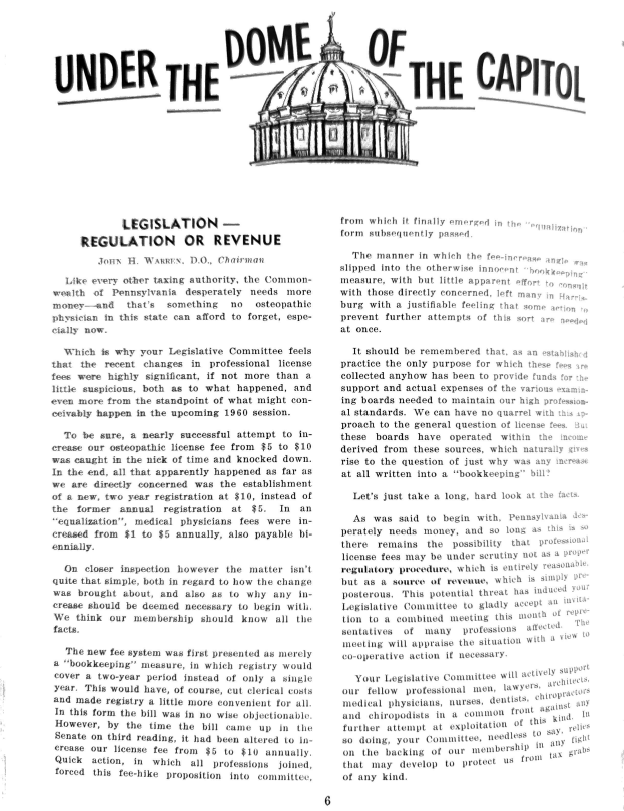
The Pennsylvania Osteopathic Medical Association, or the Pennsylvania Osteopathic Association as it used to be called, has always had a clear mission: to advocate for the osteopathic physicians in the state of Pennsylvania. Every month, POMA members receive an electronic issue of Under the Dome, updating all our members on the legislative moves over the past month. “Under the Dome of the Capitol” used to be published in the Journal, as it was in this Winter 1961 issue. This particular article highlighted the work that the legislative committee did to protest the increase in cost of an osteopathic medical license from $5 to $10 annually (ultimately, the cost remained at $5). It also highlights an effort by the state to treat allopathic physicians equally, as the cost of their medical license increased from $1 to $5 annually. While none of us now would protest a change in the cost of our medical license to $10, POMA’s government affairs committee meets monthly to review legislative changes and ensure our advocacy mission continues.
|
|
February 2026 | Vol. 70, No.1
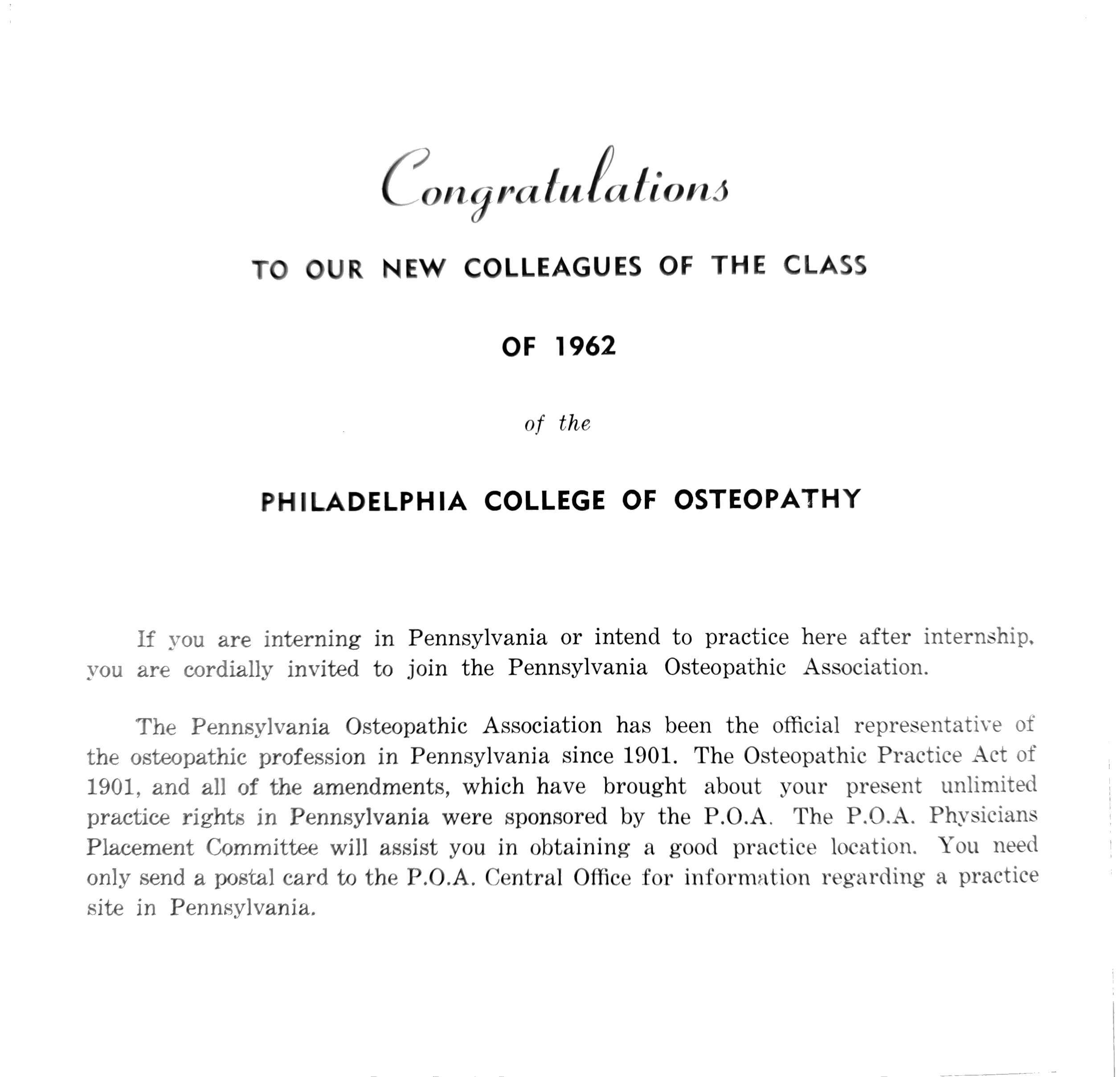
Even in 1962, membership was a key discussion at the Pennsylvania Osteopathic Association, as POMA was known then. This ad congratulates the recent graduates of the Philadelphia College of Osteopathy and invites them to join the POA. Now in 2026, we are still focusing on membership in an era where many organizations are suffering the same fate.
. |
October 2025 | Vol. 69, No.3

While the treatments may have changed (a quick Google search indicates that the words “omaloids” and “garcels” must have been misspelled and instead pulls up websites dedicated to Scrabble Word Finders and Haitian-American actresses), obesity and its treatment were hot topics in 1960 and, of course, remain so to this day. The obesity rate in 1960 was approximately 13%; that number more than tripled to 40% by August 2023. Fortunately, advances in technology have allowed for the expansion of the treatment of obesity..
|
|
|
|
|
<< first < Prev 1 2 Next > last >>
|
|
Page 1 of 2 |